
Quick Summary
- A perfect Guinness pour takes exactly 119 seconds — and that wait isn’t theater, it’s physics.
- The secret is nitrogen: Guinness runs on a 75/25 nitrogen-to-CO2 blend that creates the iconic cascade, creamy head, and smooth finish you can’t replicate with standard CO2 lines.
- Most NYC bars rush it. At Hibernia in Hell’s Kitchen, we don’t — and after reading this, you’ll never settle for a flat pint again.
You sit down at a bar, order a Guinness, and the bartender slides it in front of you thirty seconds later. It looks fine. You take a sip.
It’s flat. Watery. The head is a thin, sad foam that disappears before you can finish the thought.
That’s not a Guinness. That’s a shortcut dressed up in a pint glass.
A perfectly poured pint of Guinness is one of the most technically specific acts in all of bartending — and once you understand what’s actually happening inside that glass, you’ll never look at a rushed pour the same way again. At Hibernia Bar, our authentic Irish pub in Hell’s Kitchen, this isn’t a ritual we perform for show. It’s the standard. Every single time.
Here’s exactly what goes into it.
It Starts Long Before the Glass: The Gas Line Secret
Most people think a Guinness pour is just about technique. It isn’t. It starts at the keg.
Standard draft beers run on CO2. Guinness doesn’t. Our draft lines run on a 75% nitrogen / 25% CO2 blend — and that ratio is everything. Nitrogen molecules are smaller and less soluble than CO2, which means they create finer, tighter bubbles. That’s what produces the famous cascade: those thousands of tiny bubbles racing downward along the sides of the glass in a swirling, almost hypnotic wave.
Think of it like this: CO2 is a garden hose. Nitrogen is a fine mist sprayer. One floods the glass with big, aggressive bubbles. The other creates something silky.
We keep our lines chilled to 38°F (3.3°C) — the exact temperature Guinness specifies to maintain the gas blend and pour consistency. A line that’s even a few degrees too warm throws off the entire cascade. This is why you can’t replicate a proper pint from a can at home, and why so many bars — even ones that think they’re doing it right — serve you something mediocre.
The Two-Part Pour: Why 119 Seconds Isn’t Optional
Here’s the actual pour. There are two stages, and you cannot skip either one.
Stage 1: The Fill
Hold the tulip glass at a 45-degree angle under the tap. Pull the handle forward — never push it — and fill the glass to the harp logo, which sits just below the rim. This takes about 20–25 seconds.
Then you stop. You set the glass down. And you wait.
Stage 2: The Settle
This is the part that separates a proper pour from a rushed one. You’re watching the cascade — that swirling, creamy surge of bubbles that appears to move downward through the glass. That’s nitrogen doing its job, separating from the liquid and rising to form the head.
It takes approximately 90 seconds to fully settle. The pint transforms from a muddy tan to a deep, jet-black body with a thick, creamy dome sitting above the rim.
Only then do you top it off. You push the handle back (not forward) for the final fill, domming the head just above the glass edge. Total elapsed time: 119 seconds.
That’s not a quirky tradition. That’s physics.
The Visual Test: How to Spot a Perfect Pour Before You Take a Sip
You don’t need to be a bartender to know if you’ve been handed a proper pint. Here’s what to look for:
- Color: Deep, almost opaque black with ruby-red tones when held to light. Not brown, not murky.
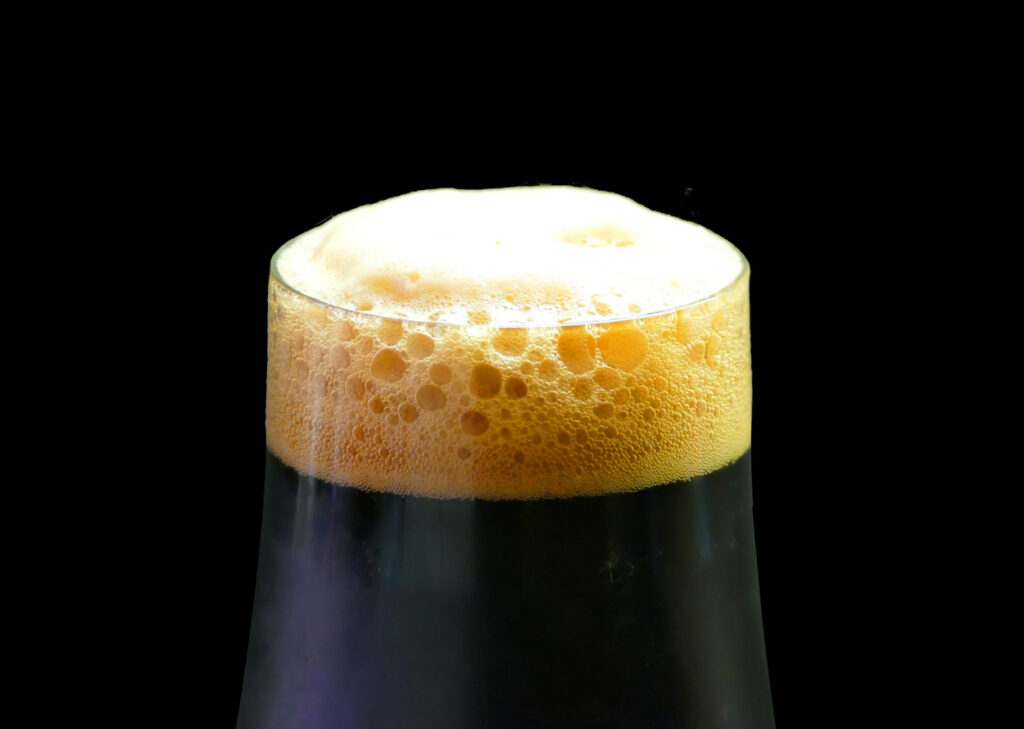
- The Head: Thick, dense, and creamy white — standing at least 1–1.5 cm above the rim. It should hold its shape for several minutes.
- The Dome: The head should be slightly rounded above the glass, not flat or sunken.
- No Big Bubbles: Large bubbles in the head mean CO2 contamination or a dirty line. Fine, tight foam only.
- The Cascade: If you’re watching it pour and don’t see that downward swirl, something is wrong with the gas mix.
If your pint fails two or more of these, send it back. A good bartender won’t be offended — they’ll respect you for knowing the difference.
Why Hell’s Kitchen Is the Right Place for This Pint
New York moves fast. We get it — we’re right here in the middle of it, at 401 W 50th St, just off 9th Avenue.
But Hibernia isn’t a place where we rush the pour because the bar is three-deep. We’re a neighborhood pub first. The kind of place where your bartender knows your name, the Steelers game is on with the sound up, and the pint in front of you was made the right way — even if that means you waited two minutes for it.
That’s the Irish way. Céad míle fáilte — a hundred thousand welcomes — doesn’t mean getting you in and out the door. It means making sure what you get is worth your time.
Conclusion & Next Steps
The perfect pour isn’t magic. It’s a 75/25 gas blend, 38°F lines, a 45-degree angle, and 119 seconds of patience. It’s a craft that most bars in this city don’t bother with — and one we take seriously every shift.
Now that you know what a proper pint looks like, the next step is tasting one. Come find us in the heart of Hell’s Kitchen — we’ll have it ready in exactly 119 seconds.
Sláinte.
FAQ
How long should a perfect Guinness pour take?
A proper two-part Guinness pour takes 119 seconds from start to finish. The first stage fills the glass to about three-quarters full at a 45-degree angle (roughly 20–25 seconds), followed by a 90-second settle that allows the nitrogen cascade to complete. Only then is the pint topped off. Any bar serving you a Guinness in under a minute is cutting corners.
Why do bartenders let Guinness settle before finishing the pour?
Because nitrogen — not CO2 — pressurizes the keg. Nitrogen creates thousands of tiny bubbles that need time to separate from the liquid and rise to form the dense, creamy head Guinness is known for. Rushing this process collapses the cascade prematurely, leaving you with a flat, thin, or over-carbonated pint.
Does the two-part pour actually change the taste of Guinness?
Yes, significantly. The two-part pour allows the nitrogen to fully degas from the liquid, which produces a smoother, creamier mouthfeel and a more balanced flavor profile. A rushed pour traps excess gas in the liquid, making it taste sharper and more carbonated — closer to a standard CO2 lager than the velvety stout it’s supposed to be. The head also acts as an aroma filter; a proper dome concentrates the roasted malt notes before they reach your nose.